
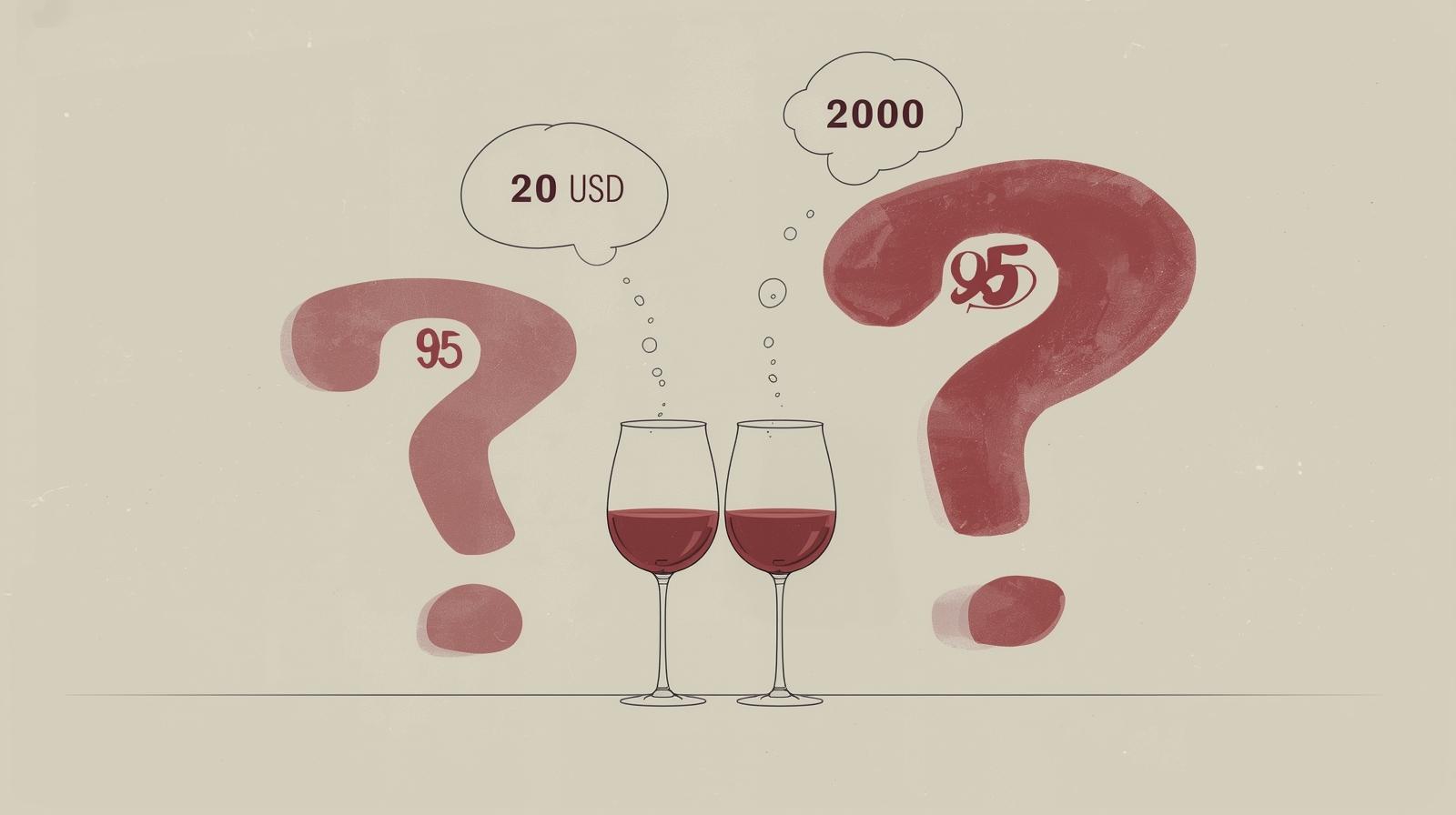
In the world of wine criticism, numbers reign supreme. Ninety-two points here, ninety-four points there—a tidy universe in which pleasure becomes numeric and, therefore, manageable. Then comes the familiar conundrum: two bottles, worlds apart in price, awarded identical scores.
The practical question seems obvious: If the scores are equal, shouldn’t I simply buy the cheaper wine? On the surface, this appears rational. Yet beneath that rationality lies a surprisingly rich philosophical question about perception, expectation, and the value we assign to pleasure itself.
Wine Scores Aren’t Born in a Vacuum
Unless we’re discussing strict blind tastings, reviewers rarely encounter wines stripped of context. Price, reputation, region, even bottle design—these elements shape perception long before the first sip reaches the tongue.
Consider the psychology at work: when a relatively inexpensive wine tastes surprisingly good, it exceeds expectations. Reviewers, being human, reward that pleasant surprise. The score rises not strictly because the wine is objectively superior, but because it transcends the narrative attached to its price tag.
Meanwhile, expensive wines carry the burden of prestige. With elevated expectations, merely being “good” registers as disappointment. Reviewers often judge high-priced bottles not against other wines, but against an idealized standard that exists only in imagination. Equal scores, therefore, often conceal profoundly unequal judgments.
The Tyranny of Expectations
Expectations distort experience—Nietzsche understood this well. When we anticipate transcendence, anything less feels like failure. When we expect mediocrity, any delight becomes revelation. Wine scores, then, tell us as much about the psychology of anticipation as they do about the chemistry of grapes.
This is an epistemic trap: we mistake a conditioned reaction for unmediated truth.
Modern cognitive science confirms what philosophers intuited centuries ago. Price priming makes us perceive expensive wines as richer and more complex. Expectation anchoring causes cheaper wines to seem more impressive when they surpass their stereotype. A 92-point budget wine and a 92-point luxury wine do not represent the same kind of excellence—the numeral flattens what the experience expands.
Utility Versus Narrative Value
From a utilitarian standpoint, equal scores suggest we should maximize pleasure per dollar. The cheaper bottle wins every time. But pure utilitarianism misses something essential: the value of anticipation, ritual, and story.
The expensive wine may not taste four times better. But it offers something beyond sensation—a narrative. Perhaps it comes from a rare parcel of land, represents a once-in-a-decade vintage, or possesses the potential to become spectacular with age. Walter Benjamin would remind us that aura, rarity, and provenance carry genuine experiential weight.
We don’t just drink the wine; we drink the story it tells.
Blind tastings reveal this clearly. Stripped of context, prestige, and price, inexpensive wines often rank surprisingly high. Sensory pleasure levels out when the mind cannot magnify differences that chemistry alone doesn’t justify. Schopenhauer might say we’re enchanted by representation rather than reality.
What Kind of Value Do You Seek?
The answer depends on what you’re after:
If you seek pleasure now, with minimal cost: Choose the cheaper bottle. The sensory experience may be equivalent.
If you desire meaning through rarity and story: The expensive bottle earns its place. You’re purchasing more than taste—you’re buying context, history, possibility.
If you’re curious about your own biases: Taste them side by side. You may discover that your values, not your palate, ultimately decide.
The Existential Sip
Wine is never just consumption—it’s a test of our relationship to expectation. With every glass, we negotiate between what we think we should feel, what we actually feel, and what we wish feeling meant.
Sartre would argue that freedom resides precisely in that negotiation. The choice between bottles is also a choice about which version of ourselves we wish to inhabit: the pragmatist who maximizes utility, or the romantic who values aura and myth.
Conclusion: Scores Are Shadows
Equal numbers hide unequal worlds. They flatten surprise, strip away narrative, and mask the invisible influence of expectation. A 92-point wine at $15 may taste like rebellion against pretension. A $60 bottle may taste like culture, tradition, and aspiration. Both experiences are valid, but they are not interchangeable.
So should you buy the cheaper wine?
You should—if you seek pleasure without story.
You shouldn’t—if you believe that aura, myth, and potential also enrich the glass.
Either way, drink thoughtfully. Philosophy begins exactly where numbers end.