
What is climate justice?
The “climate justice” has been growing more than ever, particularly in major global cities. Climate justice is a movement that seeks to examine the root causes of environmental problems (caused by climate change) occurring on Earth by discussing them and examining why the perpetrators and victims are not the same. Between developed and developing countries, and even within any one country, the damage caused by environmental issues often falls primarily on the socially vulnerable. This inequality, which prevents social justice from being achieved in climate issues, must be corrected. Therefore, organizations engaged in the climate justice movement represent those vulnerable to climate change, including children, the elderly, women, racial minorities, and the poor, and are increasingly recognized as one of the most important social discourses in the modern world.
Contradictions in the “Name of Justice”
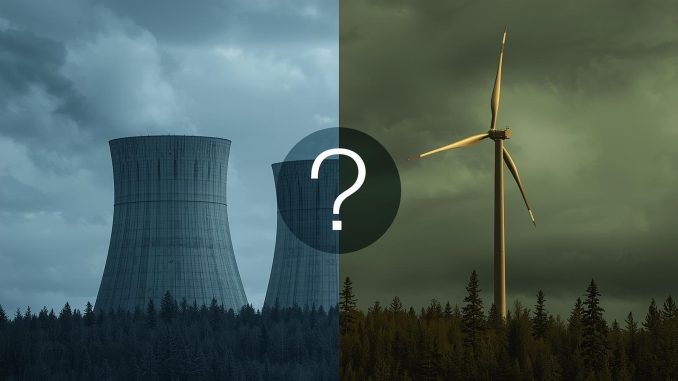
However, this climate justice movement demands a great deal of self-reflection in a specific area: the genuine efforts of civil society to protect the socially vulnerable and ensure human survival are increasingly being permeated by political identities driven by specific groups. Observing this structuralization and politicization of civil society movements raises a fundamental question: “Is this direction of change truly effective for our society?” In particular, the staunch opposition of many climate justice groups to nuclear power—in some cases, to the point of confusing whether they are anti-nuclear or climate justice groups—raises doubts about their fundamental understanding of nuclear power. Why do climate justice groups oppose nuclear power, a technology scientifically proven to be the most effective in reducing carbon emissions, as unacceptable? In this article, we explore the origins of this peculiar conflict and question whether the current anti-nuclear movement can truly be a climate justice movement.
Fear of Ignorance: House of Dynamite and Queequeg’s Bed
The existential risks posed by nuclear weapons and climate change are often completely ignored or grossly exaggerated. This phenomenon stems from the fact that, despite their frequent exposure in the media, few people actually fully understand the underlying theoretical foundations. Consequently, when recognizing these acute issues, the public tends to uncritically accept the arguments of their own group (especially those with shared political identities) rather than attempting to understand the content based on scientific knowledge. As a result of this, media outlets and influencers who share a particular political party’s political identity often attempt to visualize important issues in their own language, and these visualized slogans often persuade people emotionally before scientific understanding. A classic example of how this ignorance renders us powerless in the face of nuclear weapons and, through this, fosters intense fear is depicted in Kathryn Bigelow’s recently released Netflix film <House of Dynamite>. Faced with an unidentified nuclear missile heading toward Chicago, the President and Secretary of Defense of the United States, the world’s superpower, suspend rational judgment and are consumed by fear. They dismissed the action manual regarding nuclear weapons, which could be fatal to America’s security, as a fantasy rather than a reality. The film reveals the human nature of trying to ignore incomprehensible facts, a phenomenon that evokes the archetype of human psychology underlying the fear depicted in the novel <Moby Dick>. When the protagonist Ishmael is forced to share a bed with the strange cannibal Queequeg, he exacerbates his fear through his ignorance, monologues, “Ignorance is the parent of fear.”
Perhaps our fear of nuclear weapons mirrors this. The image of catastrophic fear evoked by “nuclear weapons” has been superimposed on the image of nuclear power generation using “nuclear” technology, potentially leading us to substitute ignorance for fear before we even grasped its true nature.
What if we didn’t have nuclear power technology? Historically, since the dawn of petroleum use, human race has produced a massive amount of carbon dioxide. Electricity, the foundation of civilization, was produced from oil and coal, and most of the items we wear and use are made of materials derived from petrochemicals, enabling cheap mass production. Fossil energy, which has driven human civilization, is now being blamed as the primary culprit of the climate crisis. Conversely, nuclear power has, in some ways, been our most powerful carbon suppressor over the past several decades.
So, let’s put aside our fears for a moment and examine the scientific evidence presented in the data. According to the data, if the world had replaced nuclear power with coal or oil for electricity generation, we would have emitted approximately 110 Gt CO₂ more than we do now. This is a staggering amount, three times the current global annual emissions, or roughly three years’ worth. Furthermore, this additional emissions would have accelerated global warming by several decades. In other words, if carbon dioxide emissions continued at current rates, the environmental problems predicted for 2050 would already have occurred. To put it more simply, by 2025, we will have experienced extreme heat waves, droughts, and flooding in major coastal cities (New York, Tokyo, Shanghai, LA, etc.)—things you only see in movies. In other words, it’s only thanks to nuclear power that we are able to weather the current climate crisis. Is it really reasonable to label nuclear power as “evil” even in the face of this clear data?
Honest Confession: Why I Oppose Nuclear Power Despite The fact
To avoid any misunderstanding, let me be clear: I fundamentally disapprove of nuclear power. Naturally, I believe humanity must transition to renewable energy in the long term. However, my belief in this shift isn’t based on the unfounded, unscientific reasons many environmental and climate justice groups currently claim, such as solar power being cheaper, safer, or cleaner than nuclear power.
The reason I’m wary of nuclear power is that, no matter how safe the technology itself is (Current nuclear power generation technology has secured safety to the point where the probability of a target accident is one in hundred thousand years.), we continue to witness disasters related to nuclear power. A closer look reveals that almost every disasters are linked to “human error.” In other words, no matter how technologically safe a nuclear power plant is, it’s ultimately humans who operate it, and as we all know, humans are always prone to making mistakes. Let’s look back at the recent tragedies of Chernobyl and Fukushima. Those accidents were primarily caused by “human error,” such as violations of operating regulations and complacency, rather than design flaws or mechanical failures. Humans learn through mistakes. However, if a single mistake can lead to an irreversible disaster, eliminating the opportunity to start over, we cannot rely on such technology. This is the real reason I’m concerned about existing large-scale nuclear power plants. But even so, shouldn’t the closure of nuclear power plants be implemented only after in-depth discussion and deliberation regarding the problems that will arise if it is carried out without alternatives?
Inconvenient Truth: Germany’s Reality: Kicking Off Nuclear Power
Here lies the paradox of “climate justice.” Germany declared a nuclear phase-out and dramatically increased its share of renewable energy, but in return, electricity prices skyrocketed. To compensate for the shortfall, it had to temporarily restart coal-fired power plants or import nuclear power from neighboring France. Perhaps wealthy Germany can afford these costs. Despite some calls for the resumption of nuclear power, the German parliament once again confirmed the permanent shutdown. But what about countries just beginning to grow? Is it fair to force them to use expensive and unstable renewable energy sources, saying, “Nuclear power is dangerous, fossil fuels are bad, so use only expensive and unstable renewable energy sources”? This is tantamount to developed countries only judging from their own perspective and kicking away the ladder they climbed (a sort of shortcut). Without cheap and reliable electricity, developing countries would be deprived of many opportunities. While reducing coal and oil consumption is necessary, with current renewable energy technologies, nuclear power may be the only technology that can simultaneously reduce carbon dioxide emissions and provide cheap and stable power generation. Isn’t true climate justice not about the moral satisfaction of the citizens of developed countries, but about ensuring the survival and development of developing countries?
Furthermore, renewable energy may not be just for the socially vulnerable even among the citizens of developed countries. As mentioned earlier, Germany, the world’s wealthiest country, has shown that many people are struggling to afford rising energy costs, and these skyrocketing costs have significantly reduced their quality of life. In other words, we can no longer insist on the illusion that renewable energy is cheap and clean. We must convince them that, despite the increased costs, it is a necessary choice for the future, and all members of society must devise alternatives to support those who are affected by this process. Of course, in the short term, it wouldn’t hurt to explore other alternatives.
New Alternatives: A Realistic Tool for Climate ‘Justice’
So, how can we reduce the risk of ‘human error’ while providing ‘carbon-free, stable energy’ more affordably and reliably? Besides the current renewable energy technologies, are there other renewable energy technologies we should consider?
One of the recently emerging alternatives is the small modular reactor (SMR). SMRs address the challenges of conventional nuclear power generation using large reactors through miniaturization and modularization. Their small size and short safety distances allow them to be installed close to cities. In Helsinki, Finland, the heat generated by SMRs is being planned for district heating in addition to electricity generation. Plans include installing SMRs within cities. This technology is considered suitable for developing countries as well, in terms of safety and cost.
We also need to focus on various renewable energy technologies for countries with limited sunlight or wind. Technologies utilizing waves or tidal variations are being developed for countries bordering the ocean. Small scale pumped storage power plants are also being developed to address the environmental damage caused by large-scale dam construction. These technologies utilize closed channels and mix high-density byproducts with water, resulting in higher power generation efficiency while using the same volume of liquid (water).
Beyond Outdated Dogma: Toward a True Solution for the Underprivileged
Now, the climate justice movement must go beyond the “anti-nuclear dogma” from past. The vague fear of nuclear weapons, stemming from the anti-war movement of the 1960s, should not stand in the way of achieving climate solutions in 2025 and year after. Young activists like 18-year-old Ia Anstott from Sweden call this “outdated and unscientific,” and argue that by ignoring carbon-free alternatives, it indirectly supports fossil fuels. Furthermore, we must address the structural contradictions behind anti-nuclear advocacy, which seeks to profit from solar and wind power. If we are unwittingly swept up in the propaganda generated by unethical corporations and media outlets, the future of civil society movements will be bleak.
True climate justice is not an ideology, but a process of finding practical solutions. In other words, we must find mutually beneficial answers through practical experimentation and exploration, not slogans. While we must pursue the ideal of renewable energy for the future of humanity, the most crucial step in this process is to consider who will inevitably be left behind in the process of realizing this ideal and what alternatives we must provide for them. We must also have the courage to make sound choices based on scientific reasoning, even if this approach faces attacks based on political identities. Faced with the enormous waves of the climate crisis, we must rise from the dark bed of fear, discover the hidden human side of Queequeg, and join hands with him to navigate the sea of reality.